
The short answer
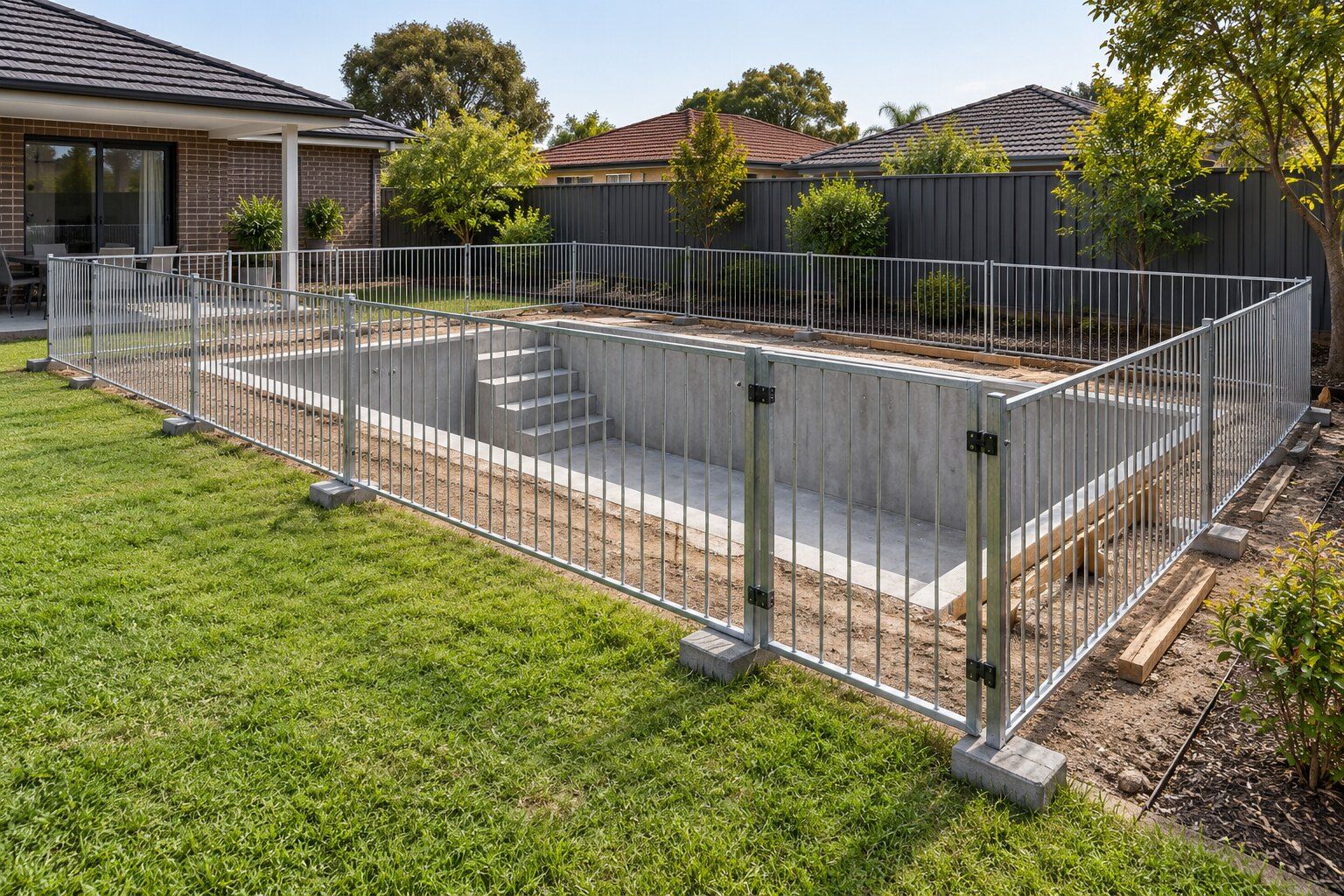
The NSW Government says that when you build or install a pool you must put up child-resistant temporary fencing around the pool area while it's under construction, keep a sign up saying the pool is not to be used, and not let anyone use the pool until an occupation certificate is issued. No NSW Government page sets a standard for the temporary fence itself, so ask your principal certifier what they will accept before the pool can hold water.
What NSW requires while a pool is being built
The NSW Government's guide for pool owners lists what you must do when building or installing a new pool:
- "ensure that a principal certifier (council or private certifier) has been appointed"
- "install child-resistant temporary fencing around the pool area while it is under construction"
- "ensure that the permanent pool fence complies with the Building Code of Australia"
- "arrange an inspection by the principal certifier once the permanent fence has been installed"
- "not allow the pool to be used by anyone until an occupation certificate has been issued"
- put up and maintain a sign saying the pool is not to be used until an occupation certificate has been issued
The Swimming Pools Act 1992 (section 25) gives a defence during construction where the pool is empty or holds less than 300 mm of water, or where appropriate measures restrict access. Don't rely on that instead of a fence: rain can fill a pool shell, and councils expect it. Georges River Council's pool policy, for one, commits it to "Ensure swimming pools under construction and portable pools are adequately fenced".
The "not to be occupied or used" sign
Clause 10 of the Swimming Pools Regulation 2018 requires the occupier of a property where a pool is being built to keep a sign up that:
- bears the words "This swimming pool is not to be occupied or used"
- is in a prominent position close to the pool
- stays up until an occupation certificate or a certificate of compliance is issued
- is legible from at least 3 m (clause 11)
The penalty notice for not having it is $110. Spa pools are not covered by this sign rule. The CPR sign is a separate requirement once the pool is finished: see the pool CPR sign guide.
What a temporary pool fence should do
No NSW Government page we found names a standard for temporary pool fencing. Some councils spell out what they expect:
- Wingecarribee Shire Council, in the Southern Highlands, requires pools under construction that can hold more than 300 mm of water to have a temporary child-resistant barrier that complies with the Building Code of Australia, can't be removed without a tool, and has a self-closing gate that opens away from the pool.
- The Hills Shire Council says that during construction, or building work where an existing barrier is compromised, "Suitable fencing must be provided for the period that the hazard exists."
Temporary pool panels and gates aren't all the same. Smithfield supplier TTFS says its own temporary pool gate "does not comply with the Australian Standard AS 1926.1-2012 Safety barriers for swimming pools". Ask your principal certifier what temporary barrier they will accept, and check your development consent or complying development certificate for conditions, before the pool can hold water.
Building-site fencing is a different duty
SafeWork NSW expects whoever manages or controls a building site to secure it against unauthorised access, and its checklist refers to AS 4687 for site fencing. That is a workplace duty. The child-resistant pool barrier is the owner's duty under the pool rules, and a general site fence panel isn't automatically a child-resistant pool barrier.
From temporary fence to occupation certificate
- Keep the temporary barrier up, closed and in good repair until the permanent fence is finished. Check it after wind, rain and each delivery to the site.
- Install the permanent pool fence, gates and CPR sign. Glass, aluminium and other pool fencing over $5,000 needs a licensed contractor.
- Register the pool on the NSW Swimming Pool Register, then book the principal certifier's inspection of the permanent barrier.
- Wait for the occupation certificate before anyone uses the pool.
North Sydney Council's program says an occupation certificate can only be issued by the principal certifier, and that it "remains relevant for 3 years under the SP Act and acts in lieu of a certificate of compliance". After that, a lease needs a certificate of compliance, and a sale needs a certificate of compliance or non-compliance.
Temporary pool fence hire in Sydney
Sydney suppliers quote temporary pool fencing per job rather than publishing prices. The quote usually depends on the length of fence in metres, how many weeks you need it, whether it includes a self-closing gate, and delivery, installation and pick-up.
When you ask for a quote, give the supplier the pool area's dimensions, the expected build time and access to the backyard, and ask whether the panels and gate are suitable as a child-resistant pool barrier. Then confirm with your principal certifier.
Common questions
Do I need temporary pool fencing in NSW?
Yes. The NSW Government says owners building or installing a pool must install child-resistant temporary fencing around the pool area while it's under construction.
What sign do I need while my pool is being built?
A sign with the words "This swimming pool is not to be occupied or used", in a prominent position near the pool and legible from 3 m, until an occupation certificate or certificate of compliance is issued.
Can I fill the pool before the permanent fence is installed?
Not without an effective child-resistant barrier around it. Check your development consent or complying development certificate for conditions about filling the pool, and ask your principal certifier.
Is a builder's site fence enough around a pool under construction?
Not automatically. Site fencing is the builder's workplace safety duty. The pool needs a child-resistant barrier, so ask your principal certifier what they'll accept.
When can we start using the new pool?
Only after the principal certifier has inspected the permanent barrier and issued the occupation certificate.
How much does temporary pool fence hire cost in Sydney?
Sydney suppliers quote it per job. The price depends on the length of fence, the hire period, the gate and delivery and installation.
Where this information comes from
The prices, rules and advice on this page come from these published pages, checked on 22 October 2026.
- NSW Government: Owning a pool or spa, your obligations · Building Commission NSW guide to barriers, registration, sale and lease certificates and CPR signs (updated 16 March 2026)
- Swimming Pools Act 1992 (NSW) · The Act: barrier duties, inspections, certificates, council directions and dividing fence costs (current version from 14 August 2026, checked 23 October 2026)
- Swimming Pools Regulation 2018 (NSW) · The Regulation: CPR sign contents, certificates of non-compliance, the 90-day rule for buyers and penalty notice amounts (current version from 1 December 2021, checked 23 October 2026)
- Wingecarribee Shire Council: Swimming pools · Southern Highlands council's requirements for temporary barriers around pools under construction
- The Hills Shire Council: Pool and spa regulations · Council page on pool safety during construction and enforcement
- Georges River Council: Swimming pool compliance policy · Council policy on inspections, enforcement and pools under construction (September 2023)
- TTFS: Temporary pool fence gates · Smithfield temporary fencing supplier's product notes on its pool gate
- SafeWork NSW: Site security checklist · Construction site security duties for builders, including site fencing
- North Sydney Council: Swimming pool inspection program · Council program on complaints, notices, directions, strata inspections and occupation certificates (version 2, 27 October 2025)
- NSW Government: Fencing work licences · When residential fencing work needs a contractor licence